Showing posts with label 1930-1939. Show all posts

Wednesday, 14 November 2012

Infrastructure change throughout Herschel

Miss Harriet came to Herschel on the assurance that further extensions would be undertaken, when she came to visit the school, she noticed a lack of infrastructure for this potentially beautiful school because of the large amount of land which the school consumed. Miss Robinson then agreed to join the role of being the principle of the Herschel Girls’ School situated in Claremont during 1930 only if the council would spend more money on the buildings of the school grounds, which indicated her determination to transform Herschel from ordinary to extra-ordinary and to improve in the infrastructure at Herschel.
During the 1930s, there were many financial problems brought on by the Great Depression. This was a time of economic and political strain during this time throughout South Africa. The demand for South African agriculture and mineral exports declined drastically and a large portion of agricultural industry were unable to repay mortgages on their over-capitalised farms. All these financial strains around South Africa at this time led to further dislike of the ruling government, the National Party.
Many new buildings such as a library which is now currently the chapel was built at the Herschel Girls’ School. At this time, there were only fifty-five students who attended Herschel.
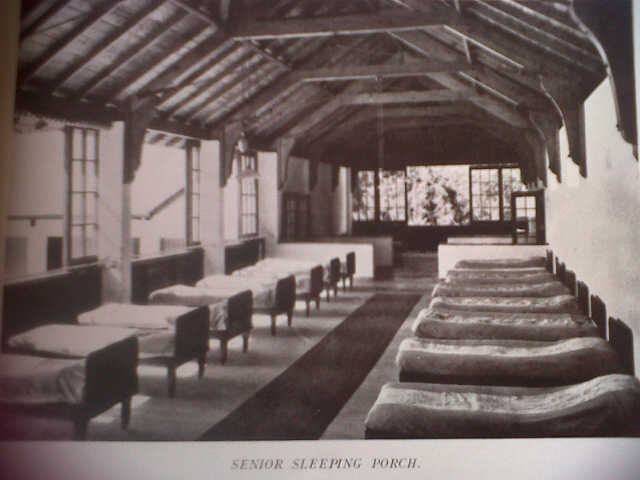
Senior open air balcony
In the late 920s and early 30s, it was common to sleep in the open air on a balcony, it was said to be good for one’s health to do so. Many of the houses in Cape Town during this period were doubled-storey houses and many houses had balconies. Further extensions were made around the new hall in 1930 and a sleeping balcony was provided there for the seniors. A dining room, the sleeping balcony and a classroom between the hall and the dining room wing was built.
By this time, the financial strain had subsided and Miss Robinson took advantage of this and saw it as an opportunity for change and then extended Herschel even more. She insisted on building a part of the school which was the Kindergarten, which is currently the Staffroom at the Senior School which had their own toilet facilities as well as a large classroom and Domestic Sciences ( which is now currently called Consumer Studies) classroom which she linked to the hall. Miss Robinson then managed to get the balcony extended, a fully equipped sick bay, an Art room, a new Staffroom with an adjacent cloakroom and a Science Laboratory. All these buildings were completed and opened in 1936. This was the most rapid infrastructural change at Herschel so far.
Library wing
In 1939-1940, the Baxter library was added to the school in the same year that Miss Robinson retired. The library was added onto the school campus, and this is currently where the chapel is today. William Duncan, who was the mayor of Cape Town and a very successful businessman, married Ethel Jagger in 1907-1908. The namely ”Jagger” is one of Herschel’s three houses namely; Rolt, Merriman and Jagger. Each student is put in a house and represents their respective houses in either cultural, academic or sport activities that take place throughout the year.
The Kindergarten
Miss Harriett Robinson has contributed a huge amount of infrastructural change and development o the Herschel Girls’ School and has transformed the school throughout a decade of development and has contributed to the current working environment of Herschel. Miss Robinson is a large aspect of history to Herschel and has laid a foundation for the modern day to build on from what she has provided us with. As time and society changes, technology and infrastructural development continues to evolve and hopefully we can lay the foundation of tomorrow.   

The front of the school

Friday, 19 October 2012

Headmistresses 1930-1939


Miss Morley A.Ralph
Miss Morley A. Ralph was the first headmistress of Herschel, until she was sadly asked to retire in 1933, after 11 years. By then the Great Depression was upon South Africa, causing Herschel to struggle to continue. The number of students were rapidly diminishing; from 88 girls in 1930 to 65 in 1935 and continued to decrease. Miss Ralph had a passion for fresh air, which was very popular in that time. This passion gave rise to the famous sleeping-balconies for the boarders, as well as many excursions to St. James beach and hikes up the mountain. Many years of Herschelians suffered through the blustering South Easters and Cape Winters. Miss Ralph’s retirement was a result of the newly set retirement age, of 50. Miss Ralph was over 50. This was a blow to her as well as the school, but never did she allow the girls to notice. The girls were terribly sad to see her leave.

Excursion to St. James Beach

Miss Harriet Robinson was appointed at the end of 1932 but could only join Herschel in 1933. So Miss Ralph graciously stayed on until the end of the first term. This was the first time in history Herschel had a change of headmistress. Miss Robinson accepted the position, on the condition that the council was prepared to spend on building and equipment improvements. The council accepted despite the troubled financial times. Miss Robinson wore an academic gown, which was very uncommon for the time, this shows her dedication to academic aspects and improvements to Herschel. Soon after her arrival, the student numbers began to increase; at the beginning of 1934 there were 52 girls, by the end of the year there were 62 and by 1937 there were 131 girls pulling the school out of danger.

Miss Harriet Robinson
Miss Robinson brought considerable change to the school in the years she was Head. In 1933 the idea of a new swimming bath was brought about and many events were created to raise funds. In the Lent term, Miss Robinson broke away from tradition; at the Lady Buxton Home Fete where instead of the usual handicraft stall she initiated a sweet stall. They were the first stall to sellout and raised over 23 pounds, to go towards the swimming bath. In 1934 the first Inter-House plays were performed where the proceeds went towards the swimming bath fund. To everybody’s delight, especially Miss Robinson’s, the long awaited swimming bath was completed in December 1938.

Swimming Bath in 1938
In 1934 the school year was divided into four quarters instead of what was previously three terms, divided by the Anglican calendar; Lent term, Trinity term and the Christmas term. In 1935 Miss Robinson also opened the domestic science classroom that we have today. As building improvements were important to her, a new tennis court was constructed on top of the old netball court in 1938 and down the road they started the process of building a new netball court, which was first used in a match against the Old Herschelians Society. Herschel also welcomed a new dog called Hamlet the Great Dane.
“This new and great Great Dane is ever present with us – at our meals, occasionally at our lessons and too frequently at our games.” – Miss Robinson

The first Founders Day of the school was held at St. Saviour’s Church in 1938, where Arch Bishop Phelps conducted the service. He then gave a short
speech at the prize giving back at the school. This was extensively reviewed in the Cape Times the next day.  

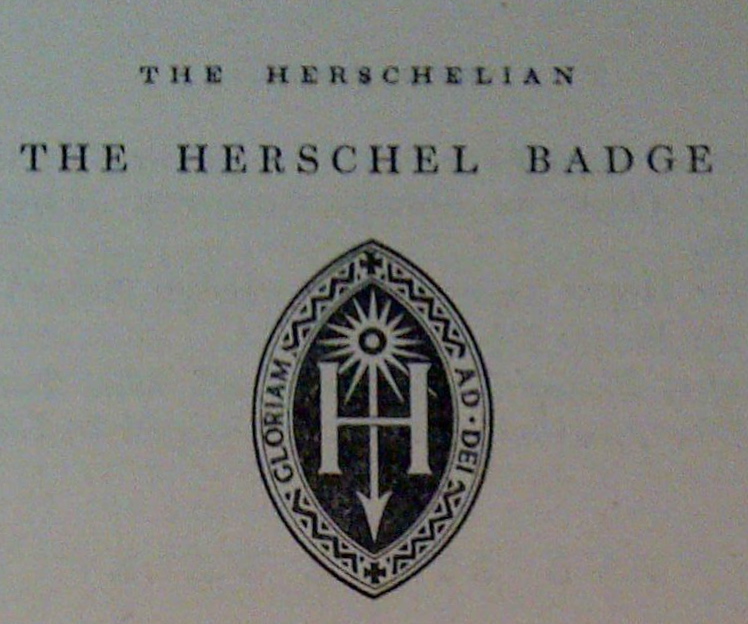
The Herschel Badge was gifted to the school by Sir John Herschel’s grandson who gave permission to use parts of the Herschel family crest in the school emblem. “I am much interested in your idea of associating your school more closely with the memory of my grandfather, and I gladly consent to your incorporating in your school badge some feature which will create and keep up that association as a tradition in the minds of the scholars.” John W. Herschel (grandson) said this in a letter on the subject. The design for the badge consist of an H, which the family refers to as ‘The Herschel H’, and combines the family initial and the symbol for Uranus, which is on the family coat-of-arms.

Herschel Badge As Designed By Mr. Groves


References:

Books
1.       Margaret Saffery. ‘The Stars Looked Down On Herschel’ – Pageant Program published in 1972

2. Various Authors. Annual Herschelians Nos. 8-14 published 1933-1939.

Saturday, 13 October 2012

Staff


I have compiled a report giving an account of the staff of Herschel Girls High School from 1922 - the start of the school up until the current year, 2012. Unfortunately, for many of the years there were few staff members and not much thought was given to the staff. The names, numbers and subjects they taught were not recorded well until 1982 and consequently, historically speaking, much information has been lost.

1922
Miss Morley A. Ralph (1922 – 1933)

In 1922 when the school first opened, there were only four members of staff.
Miss Ralph, the head of the school; Miss van Heyst – English; Miss Seabridge – Music; and the trained nurse and house mistress, Miss Statford.

1932
Miss Morley A. Ralph (1922 – 1933)

Miss Harriet Robinson (1933 – 1944) was the new head in this decade as Miss Ralph left in 1933.
In this year, one person had left and no more staff had joined. The school now also accepted staff members that were married.

1942
Miss Harriet Robinson (1933 – 1944)

Miss Barbara Elcome (1945 – 1947), successor to Miss Robinson was only head for a short two years. Miss Elcome married in 1947 on the 31st July, in England. After her Miss Caroline McLean (1947 – 1962) served as head. That year, two more women joined the staff. On the 5th of June that year, there was a staff play reading by the name of “Tons of Money”. £23 was raised for war funds.

1952
Miss Caroline McLean (1947 – 1962)

Miss McLean was the head for the whole of this decade and under her leadership, just in 1952, there came 13 staff members. Not a single person left that year either.

1962
Mrs Mavis Kittow (1962 – 1970)

Another 13 staff joined in 1962, but 5 left. Dr Barbara Silberbauer (1970 – 1978) became the new head in 1970 and also served for eight years like Mrs Kittow. Dr Silberbauer is to this day the only head with a doctorate.

1972
Dr Barbara Silberbauer (1970 – 1978)
In 1972 Miss Montgomery who had taught at Herschel for over thirty years and Miss Winifred Mulliner who had taught since 1949, tragically passed away. There were no changes to staff. Miss Pamela Geldard (1979 – 1985) was also head in this decade.

1982
Miss Pamela Geldard (1979 – 1985)
Between 1972 and 1982 a major change had occurred in staff numbers, positions, and structures. There were now thirty eight Senior School teaching staff, eight administrative staff, thirteen kitchen staff, seven ground staff and eleven part time staff. A position as vice principal had opened and Mrs S. Gillham had filled this position. Another Pamela, Mrs Pamela Duff (1986 – 1997) became head after Miss Pamela Geldard in this decade.

1992
Mrs Pamela Duff (1986 – 1997)
Not many things changed in the next decade. There were thirty two Senior School teaching staff, nine administrative staff, fourteen Music staff, four boarding staff and seven part time staff. The numbers for ground and kitchen staff stayed the same and there were now sixteen people on the Council. Senior teachers were P.L. Allen and Mrs C. M. Brathwaite and deputy head, Mrs M. Robinson. Mrs Diana van Zyl (1997 – 2007) would be the next headmistress of Herschel.

2002
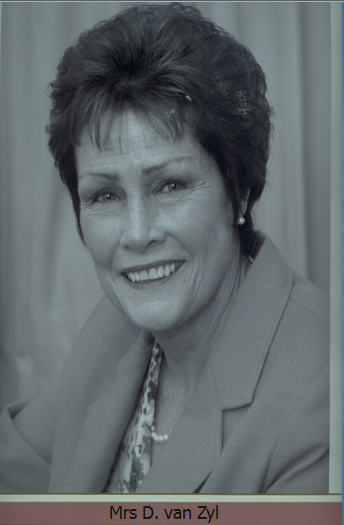
Diana van Zyl (1997 – 2007)
This decade saw through further changes. Ground staff branched off into estate (six) and maintenance (two) staff. Kitchen staff remained as thirteen. Administrative staff increased to an unbelievable twenty people and part time staff increased to ten. Senior teachers included Ms D.M. Baws, Mr A.P. Scott, Mrs M. van Schalkwyk and the chaplain, Revd. J. Tyres. The Council consisted of fourteen people. Deputy, Mrs L.C. Clarke. Mr Bruce Probyn (2008 – 2012) would be the next headmaster for five years.

2012
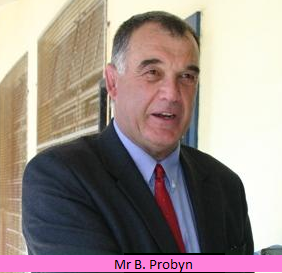
Mr Bruce Probyn (2008 – 2012)

A major change occurred for the first time ever in Herschel history; the first male principal ever – Mr Probyn. Mrs L.C. Clarke is still the deputy head and senior teachers Ms D.M. Baws, Mr A.P. Scott, Mrs M. van Schalkwyk remained as well, but with the addition of Mrs S. Grové and the Revd. B. Commin. The Council remained constant at fourteen. There are now fifty two Senior School teaching staff; six part time; eleven kitchen staff; eleven estate staff; six maintenance staff and twenty two administrative staff.

It has been ninety years of hardworking, dedicated staff and ten different principals. From four unmarried female educators, to over one hundred and twenty two staff members, male and female; married and single, in the Senior School alone. In 2013, we will welcome Mr Stuart West as the new headmaster of Herschel Girls High School.
References:
Authored by Shinoa Foflonker

Thursday, 27 September 2012

Context: The 1930s.

Many of the changes in Herschel Girls School in the 1930s was due to the effects of the Great Depression- a severe worldwide economic downturn. The decline of the economy in the United States spurred economic depression across the world, effecting even Cape Town.
Food shortages were one of the smaller effects that the Great Depression had on school life. The girls were given smaller meals, consisting of very little meat and mostly small portions of bread and soup. To many of the girls' disappointment, no ''tuck'' was allowed in school due to the tough economic situation in Cape Town during that decade.

Miss Ralph
The Great Depression also made itself felt in limiting Herschel's ability to grow and expand- the years effected by the Depression were very difficult for Herschel. Initially, the number of girls enrolled in the school dropped drastically to only 52 girls when Miss Robinson became Headmistress in 1933. The number of girls enrolled in Herschel were already low in the late 1920s, due to Herschel's lack of academic progress under Miss Ralph's leadership; causing girls to move to other, currently more established schools in the Claremont area. The Great Depression made this already existing problem worse, as less girls could afford the Herschel school fees. The stress caused by these rapidly dropping numbers caused Miss Ralph to resign in 1933.

Despite the limitations brought about by the Great Depression, the school did expand greatly under Miss Robinson's leadership and focus on developing Herschel's facilities and grounds; most of Herschel's funds were directed to this aspect when Miss Robinson was Headmistress. These new facilities and additions to the grounds attracted more girls to join the Herschel community, and the number of girls in the school increased from its initial number of 52 in 1933 to 215 girls by the end of the 1930s.

There was great modernisation and a large increase in size of Cape Town during the 1930s. This can be attributed to the Great Depression. This economic decline was felt largely in the agricultural sector of our economy. This resulted in urbanisation, as large sums of agricultural workers came to cities in hope of finding alternative work, as the agricultural sector was no longer a stable source of income. There was great residential growth in Claremont in particular, which was relevant to Herschel as with more people living in Claremont, there would be more families who would possibly enroll their daughters in the school.

Tram photographed in Cape Town in the 1930s.
Cape Town was drastically modernised and industrialised in the 1930s, as with a large influx of working people, there was an increase in factories and production. Namely, transport was modernised, and there was also an increased amount of transport routes and possibilities due to more people living in Claremont. For example, trams were built in Claremont in the 1930s, as well as the Claremont railway track. This made it easier for a larger amount of people from areas far and wide to access Herschel, also resulting in the great increase of students in Herschel in the 1930s.

Claremont also expanded in facilities and recreational sites. St Ignatius Church was built in 1932, a post office was built in 1936 and many cinemas and malls were also established. This resulted in Claremont becoming a more attractive living area, and with that more people came to live in Claremont, with some bringing daughters with them who they would possibly send to Herschel.

This expansion in Claremont in the 1930s caused the numbers of girls attending Herschel to increase largely. Claremont became more modern, easily accessible and increased in appeal due to expansion of recreational areas. This expansion of the school resulted in Herschel becoming more credible and noted, which increased attendance in the years to come.

Author: Tessa Chittenden

References:

AUTHOR UNKNOWN. 1972. The Stars looked down: Herschel School 1922-1972. Cape Town. Margaret Saffery.

Great Depression. 2012. [Online]. Available: http://en.wikipedia.org/wiki/Great_Depression. [viewed 19th September 2012]

HART, P. 1999. Claremont, Newlands and Bishopscourt street names. Cape Town. Martingraphix.

MURRAY, J. 1958. Claremont Album. Cape Town. A.A Baklema Publishers.

WORDEN, N; HEYNINGEN, E; BICKFORD-SMITH, V. 1998. Cape Town: The making of a city. Cape Town: David Philip Publishers.